AI for Business

Explore the best AI for Business — independent reviews, comparisons, pricing and step-by-step how-to guides, curated by Aizhi.

  • Augment (app)

    Augment (app)

    Augment is an augmented reality SaaS platform that allows users to visualize their products in 3D in real environment and in real-time through tablets or smartphones. The software can be used for retail, e-commerce, architecture, and other purposes. Augment created a mobile app of the same name, used to visualize 3D models in augmented reality and a web application called Augment Manager for 3D content management. The company is based in Paris, France, and was founded in October 2011 by Jean-François Chianetta, Cyril Champier, and Mickaël Jordan. In March 2016, Augment announced €3 million in its series-A round from Salesforce Ventures, which bringing the total funding since launch to $4.7 million. Augment lets businesses and 3D professionals visualize projects in their actual size and environment, on iPhone, iPad, and Android, using the power of augmented reality. Users can print the Augment tracker or create their own tracker to place the 3D models in space and at scale in real time. Common uses of the technology include product presentations, interactive print campaigns and e-Commerce product visualization. Augment has just released its augmented reality SDK solutions for retail and augmented commerce. The SDK solutions, available for both native mobile app and web integrations, allow companies to embed augmented reality product visualization in their existing eCommerce platforms. == Technology == Augment uses the following 3D technologies: Vuforia Augmented Reality SDK OpenGL == Customer cases == Companies such as Coca-Cola, Siemens, Nokia, Nestle, and Boeing are using Augment's solutions. == History == Augment was first created by Jean-François Chianetta in October 2011. Chianetta later teamed up with Cyril Champier and Mickaël Jordan for further development. The co-founding team was among the 12 startups of Season 3 of French accelerator Le Camping. The team raised one million euros (US$1,300,000) in April 2013 and moved its office to Paris. In March 2016, Augment raised US$3M Series A funding from Salesforce and other investors. In 2013, Augment's first service, Boost Business Catalog, was made available to help businesses catalogue and display their product models. Customers can rotate the images in 3D and view augmented content before deciding what to buy. == Awards == "Best Innovation" at Ecommerce Mag Trophy 2013

    Read more →
  • Documentation science

    Documentation science

    Documentation science is the study of the recording and retrieval of information. It includes methods for storing, retrieving, and sharing of information captured on physical as well as digital documents. This field is closely linked to the fields of library science and information science but has its own theories and practices. The term documentation science was coined by Belgian lawyer and peace activist Paul Otlet. He is considered to be the forefather of information science. He along with Henri La Fontaine laid the foundations of documentation science as a field of study. Professionals in this field are called documentalists. Over the years, documentation science has grown to become a large and important field of study. Evolving from traditional practices like archiving and retrieval to modern theories about the nature of documents, novel methods for organizing digital information, and applications in libraries, research, healthcare, business, and technology and more. This field continues to evolve in the digital age. == Developments in documentation science == 1895: The International Institute of Bibliography (originally Institut International de Bibliographie, IIB) was established on 12 September 1895, in Brussels, Belgium by Paul Otlet and Henri La Fontaine. It aimed to catalog all recorded knowledge using a universal classification system now known as the Universal Decimal Classification (UDC). 1931: International Institute of Bibliography (originally Institut International de Bibliographie, IIB) was renamed The International Institute for Documentation, (Institut International de Documentation, IID). 1934: Paul Otlet envisioned a “radiated library,” a global network of interconnected documents accessible from anywhere via telecommunication. This early idea is now seen as a forerunner of the internet. 1937: American Documentation Institute was founded (1968 nameshift to American Society for Information Science). 1951: Suzanne Briet published Qu'est-ce que la documentation? where she proposed that “a document is evidence in support of a fact,” expanding the definition to include objects such as animals in zoos when they are part of a scientific study. This was a significant theoretical shift in defining documents. 1965-1990: Documentation departments were established, for example, large research libraries, online computer retrieval systems and more. The persons doing the searches were called documentalists. But with the appearance of first CD-ROM databases in the mid-1980s and later the internet in 1990s, these intermediary searches decreased and most such departments closed or merged with other departments. 1996: "Dokvit", Documentation Studies, was established in 1996 at the University of Tromsø in Norway. 2001: The Document Academy was established. It is an international network that celebrates documentation. It was conducted by The Program of Documentation Studies, University of Tromsø, Norway and The School of Information Management and Systems, UC Berkeley. 2003: The first Document Research Conference (DOCAM), a series of conferences made by the Document Academy. DOCAM '03 (2003) was held 13–15 August 2003 at The School of Information Management and Systems (SIMS) at the University of California, Berkeley. 2007: Michael Buckland, Ronald Day, and Birger Hjørland expanded the theoretical foundations of documentation science. They researched and explored documents to be social artifacts, the role of ideology in classification, and how documents influenced knowledge systems. 2010s: The concept of post-documentation or “documentality” began in the 2010s, which focused on how digital traces (e.g., tweets, logs) function as documents without traditional physical form. This led to new thinking in document theory. 2016–present: The Document Academy's DOCAM conferences have continued, offering ongoing developments in the theory and practice of documentation. Themes include affect, memory, activism, and born-digital records. 2017: The journal Information Research published special issues addressing “document theory,” including views on documentation in virtual environments and digital archives. 2020–present: The growth of research data management (RDM) and open science has made documentation practices central to data sharing, metadata standards, and reproducibility in scientific work. == Theoretical foundations == Documentation science has some deep theories that explain what a document is, how people use documents, and how they are organized. These concepts were introduced by scholars who have not only studied libraries, but also philosophy, language, and social sciences. Suzanne Briet described a document as “any material form of evidence” that is made to be used as proof or to share information. An antelope in a zoo, for example, can be a document because it is being studied, classified, and described. Documents are not just things or materials but are also shaped by society. Michael Buckland noted that documents have meaning only when people agree they are useful or valid as information. He explained a document becomes a document when someone decides to use it as evidence. Ronald Day wrote about how documentation is not neutral, it can be influenced by power, ideology, and politics. He claimed that classification systems, like how libraries organize books, are not just technical tools. They also show what kinds of knowledge are seen as more important than others. In recent years, new theories have been introduced, like “documentality” by Maurizio Ferraris. He proposed that a document does not have to be a paper or file, it can also be something digital like a tweet, a database entry, or a log file, as long as it leaves a trace that can be looked at later. This theory helps explain modern digital documents. == Methodologies and practice == Documentation science includes many methods that help people collect, organize, store, and find information. These practices are used in libraries, archives, research labs, companies, and now also in online systems. === Collecting and creating documents === In the past, documentation work included gathering books, articles, reports, and other printed materials. People created records of these materials manually, using catalog cards, indexes, or bibliographies. Paul Otlet’s work with the Universal Bibliographic Repertory is one example. He created millions of card entries to organize knowledge from around the world. Today, documents are not only created by humans. Computers and machines also generate documents, like log files, metadata, and sensor data. These need new tools and methods for collection and management. === Organizing information === Organizing documents has always been a foundational element of documentation science. Methods like classification (dividing things into groups) and indexing (making lists of topics or keywords) help individuals find what they need. A widely used system is the Universal Decimal Classification (UDC) developed by Otlet and La Fontaine. Another is the Library of Congress Classification (LCC) used in the majority of U.S. libraries. Indexing can be performed by humans or by software programs that read the text and add tags to documents. Metadata is also used to describe documents. Metadata is “data about data” like the title, author, date, and subject of a document. Standards like Dublin Core are used in digital libraries to keep metadata consistent. === Retrieval and access === One of the main objectives of documentation is helping users find the right document. This is called information retrieval. In the past, this meant using catalog drawers or printed indexes. Today, people use search engines, databases, and digital libraries. Modern retrieval tools use Boolean logic, ranking algorithms, and sometimes machine learning to show the most useful results first. This is part of what is studied in both documentation science and information retrieval. === Preservation and archiving === Documents require long-term storage. This is called preservation of documents. Printed documents can be damaged by light, pests, or even time on the other hand digital documents can be deemed worthless if formats become outdated or storage facilities fail. Archivists use methods like migration, which includes moving files to new formats, and emulation, which replicates obsolete systems, to preserve materials. These methods and tools are ever changing as new technologies develop. But the main objective of documentation has remained the same, which is to keep information safe, organized, and easy to find. == Documentation in the digital age == With the expansion of the internet, computers, and cloud storage, documents are no longer just books, papers, or reports. They can now be emails, tweets, videos, websites, databases, or even log files created by machines. === Born-digital documents === Many documents today are created directly in digital form. These are called born-digit

    Read more →
  • UI data binding

    UI data binding

    UI data binding is a software design pattern to simplify development of GUI applications. UI data binding binds UI elements to an application domain model. Most frameworks employ the Observer pattern as the underlying binding mechanism. To work efficiently, UI data binding has to address input validation and data type mapping. A bound control is a widget whose value is tied or bound to a field in a recordset (e.g., a column in a row of a table). Changes made to data within the control are automatically saved to the database when the control's exit event triggers. == Example == == Data binding frameworks and tools == === Delphi === DSharp third-party data binding tool OpenWire Visual Live Binding - third-party visual data binding tool === Java === JFace Data Binding JavaFX Property === .NET === Windows Forms data binding overview WPF data binding overview Avalonia Unity 3D data binding framework (available in modifications for NGUI, iGUI and EZGUI libraries) === JavaScript === Angular AngularJS Backbone.js Ember.js Datum.js knockout.js Meteor, via its Blaze live update engine OpenUI5 React Vue.js

    Read more →
  • Two-phase commit protocol

    Two-phase commit protocol

    In transaction processing, databases, and computer networking, the two-phase commit protocol (2PC, tupac) is a type of atomic commitment protocol (ACP). It is a distributed algorithm that coordinates all the processes that participate in a distributed atomic transaction on whether to commit or abort (roll back) the transaction. This protocol (a specialised type of consensus protocol) achieves its goal even in many cases of temporary system failure (involving either process, network node, communication, etc. failures), and is thus widely used. However, it is not resilient to all possible failure configurations, and in rare cases, manual intervention is needed to remedy an outcome. To accommodate recovery from failure (automatic in most cases) the protocol's participants use logging of the protocol's states. Log records, which are typically slow to generate but survive failures, are used by the protocol's recovery procedures. Many protocol variants exist that primarily differ in logging strategies and recovery mechanisms. Though usually intended to be used infrequently, recovery procedures compose a substantial portion of the protocol, due to many possible failure scenarios to be considered and supported by the protocol. In a "normal execution" of any single distributed transaction (i.e., when no failure occurs, which is typically the most frequent situation), the protocol consists of two phases: The commit-request phase (or voting phase), in which a coordinator process attempts to prepare all the transaction's participating processes (named participants, cohorts, or workers) to take the necessary steps for either committing or aborting the transaction and to vote, either "Yes": commit (if the transaction participant's local portion execution has ended properly), or "No": abort (if a problem has been detected with the local portion), and The commit phase, in which, based on voting of the participants, the coordinator decides whether to commit (only if all have voted "Yes") or abort the transaction (otherwise), and notifies the result to all the participants. The participants then follow with the needed actions (commit or abort) with their local transactional resources (also called recoverable resources; e.g., database data) and their respective portions in the transaction's other output (if applicable). The two-phase commit (2PC) protocol should not be confused with the two-phase locking (2PL) protocol, a concurrency control protocol. == Assumptions == The protocol works in the following manner: one node is a designated coordinator, which is the master site, and the rest of the nodes in the network are designated the participants. The protocol assumes that: there is stable storage at each node with a write-ahead log, no node crashes forever, the data in the write-ahead log is never lost or corrupted in a crash, and any two nodes can communicate with each other. The last assumption is not too restrictive, as network communication can typically be rerouted. The first two assumptions are much stronger; if a node is totally destroyed then data can be lost. The protocol is initiated by the coordinator after the last step of the transaction has been reached. The participants then respond with an agreement message or an abort message depending on whether the transaction has been processed successfully at the participant. == Basic algorithm == === Commit request (or voting) phase === The coordinator sends a query to commit message to all participants and waits until it has received a reply from all participants. The participants execute the transaction up to the point where they will be asked to commit. They each write an entry to their undo log and an entry to their redo log. Each participant replies with: either an agreement message (participant votes Yes to commit), if the participant's actions succeeded; or an abort message (participant votes No to commit), if the participant experiences a failure that will make it impossible to commit. === Commit (or completion) phase === ==== Success ==== If the coordinator received an agreement message from all participants during the commit-request phase: The coordinator sends a commit message to all the participants. Each participant completes the operation, and releases all the locks and resources held during the transaction. Each participant sends an acknowledgement to the coordinator. The coordinator completes the transaction when all acknowledgements have been received. ==== Failure ==== If any participant votes No during the commit-request phase (or the coordinator's timeout expires): The coordinator sends a rollback message to all the participants. Each participant undoes the transaction using the undo log, and releases the resources and locks held during the transaction. Each participant sends an acknowledgement to the coordinator. The coordinator undoes the transaction when all acknowledgements have been received. ==== Message flow ==== Coordinator Participant QUERY TO COMMIT --------------------------------> VOTE YES/NO prepare/abort <------------------------------- commit/abort COMMIT/ROLLBACK --------------------------------> ACKNOWLEDGEMENT commit/abort <-------------------------------- end An next to the record type means that the record is forced to stable storage. == Disadvantages == The greatest disadvantage of the two-phase commit protocol is that it is a blocking protocol. If the coordinator fails permanently, some participants will never resolve their transactions: After a participant has sent an agreement message as a response to the commit-request message from the coordinator, it will block until a commit or rollback is received. A two-phase commit protocol cannot dependably recover from a failure of both the coordinator and a cohort member during the commit phase. If only the coordinator had failed, and no cohort members had received a commit message, it could safely be inferred that no commit had happened. If, however, both the coordinator and a cohort member failed, it is possible that the failed cohort member was the first to be notified, and had actually done the commit. Even if a new coordinator is selected, it cannot confidently proceed with the operation until it has received an agreement from all cohort members, and hence must block until all cohort members respond. == Implementing the two-phase commit protocol == === Common architecture === In many cases the 2PC protocol is distributed in a computer network. It is easily distributed by implementing multiple dedicated 2PC components similar to each other, typically named transaction managers (TMs; also referred to as 2PC agents or Transaction Processing Monitors), that carry out the protocol's execution for each transaction (e.g., The Open Group's X/Open XA). The databases involved with a distributed transaction, the participants, both the coordinator and participants, register to close TMs (typically residing on respective same network nodes as the participants) for terminating that transaction using 2PC. Each distributed transaction has an ad hoc set of TMs, the TMs to which the transaction participants register. A leader, the coordinator TM, exists for each transaction to coordinate 2PC for it, typically the TM of the coordinator database. However, the coordinator role can be transferred to another TM for performance or reliability reasons. Rather than exchanging 2PC messages among themselves, the participants exchange the messages with their respective TMs. The relevant TMs communicate among themselves to execute the 2PC protocol schema above, "representing" the respective participants, for terminating that transaction. With this architecture the protocol is fully distributed (does not need any central processing component or data structure), and scales up with number of network nodes (network size) effectively. This common architecture is also effective for the distribution of other atomic commitment protocols besides 2PC, since all such protocols use the same voting mechanism and outcome propagation to protocol participants. === Protocol optimizations === Database research has been done on ways to get most of the benefits of the two-phase commit protocol while reducing costs by protocol optimizations and protocol operations saving under certain system's behavior assumptions. ==== Presumed abort and presumed commit ==== Presumed abort or Presumed commit are common such optimizations. An assumption about the outcome of transactions, either commit, or abort, can save both messages and logging operations by the participants during the 2PC protocol's execution. For example, when presumed abort, if during system recovery from failure no logged evidence for commit of some transaction is found by the recovery procedure, then it assumes that the transaction has been aborted, and acts accordingly. This means that it does not matter if aborts are logged at all, and such logging can be saved under this assumption. Typical

    Read more →
  • Autoscaling

    Autoscaling

    Autoscaling, (also written as auto scaling, auto-scaling, or known as automatic scaling), is a method used in cloud computing that dynamically adjusts the amount of computational resources in a server farm - typically measured by the number of active servers - automatically based on the load on the farm. For example, the number of servers running behind a web application may be increased or decreased automatically based on the number of active users on the site. Since such metrics may change dramatically throughout the course of the day, and servers are a limited resource that cost money to run even while idle, there is often an incentive to run "just enough" servers to support the current load while still being able to support sudden and large spikes in activity. Autoscaling is helpful for such needs, as it can reduce the number of active servers when activity is low, and launch new servers when activity is high. Autoscaling is closely related to, and builds upon, the idea of load balancing. == Advantages == Autoscaling offers the following advantages: For companies running their own web server infrastructure, autoscaling typically means allowing some servers to go to sleep during times of low load, saving on electricity costs (as well as water costs if water is being used to cool the machines). For companies using infrastructure hosted in the cloud, autoscaling can mean lower bills, because most cloud providers charge based on total usage rather than maximum capacity. Even for companies that cannot reduce the total compute capacity they run or pay for at any given time, autoscaling can help by allowing the company to run less time-sensitive workloads on machines that get freed up by autoscaling during times of low traffic. Autoscaling solutions, such as the one offered by Amazon Web Services, can also take care of replacing unhealthy instances and therefore protecting somewhat against hardware, network, and application failures. Autoscaling can offer greater uptime and more availability in cases where production workloads are variable and unpredictable. Autoscaling differs from having a fixed daily, weekly, or yearly cycle of server use in that it is responsive to actual usage patterns, and thus reduces the potential downside of having too few or too many servers for the traffic load. For instance, if traffic is usually lower at midnight, then a static scaling solution might schedule some servers to sleep at night, but this might result in downtime on a night where people happen to use the Internet more (for instance, due to a viral news event). Autoscaling, on the other hand, can handle unexpected traffic spikes better. == Terminology == In the list below, we use the terminology used by Amazon Web Services (AWS). However, alternative names are noted and terminology that is specific to the names of Amazon services is not used for the names. == Practice == === Amazon Web Services (AWS) === Amazon Web Services launched the Amazon Elastic Compute Cloud (EC2) service in August 2006, that allowed developers to programmatically create and terminate instances (machines). At the time of initial launch, AWS did not offer autoscaling, but the ability to programmatically create and terminate instances gave developers the flexibility to write their own code for autoscaling. Third-party autoscaling software for AWS began appearing around April 2008. These included tools by Scalr and RightScale. RightScale was used by Animoto, which was able to handle Facebook traffic by adopting autoscaling. On May 18, 2009, Amazon launched its own autoscaling feature along with Elastic Load Balancing, as part of Amazon Elastic Compute Cloud. Autoscaling is now an integral component of Amazon's EC2 offering. Autoscaling on Amazon Web Services is done through a web browser or the command line tool. In May 2016 Autoscaling was also offered in AWS ECS Service. On-demand video provider Netflix documented their use of autoscaling with Amazon Web Services to meet their highly variable consumer needs. They found that aggressive scaling up and delayed and cautious scaling down served their goals of uptime and responsiveness best. In an article for TechCrunch, Zev Laderman, the co-founder and CEO of Newvem, a service that helps optimize AWS cloud infrastructure, recommended that startups use autoscaling in order to keep their Amazon Web Services costs low. Various best practice guides for AWS use suggest using its autoscaling feature even in cases where the load is not variable. That is because autoscaling offers two other advantages: automatic replacement of any instances that become unhealthy for any reason (such as hardware failure, network failure, or application error), and automatic replacement of spot instances that get interrupted for price or capacity reasons, making it more feasible to use spot instances for production purposes. Netflix's internal best practices require every instance to be in an autoscaling group, and its conformity monkey terminates any instance not in an autoscaling group in order to enforce this best practice. === Microsoft's Windows Azure === On June 27, 2013, Microsoft announced that it was adding autoscaling support to its Windows Azure cloud computing platform. Documentation for the feature is available on the Microsoft Developer Network. === Oracle Cloud === Oracle Cloud Platform allows server instances to automatically scale a cluster in or out by defining an auto-scaling rule. These rules are based on CPU and/or memory utilization and determine when to add or remove nodes. === Google Cloud Platform === On November 17, 2014, the Google Compute Engine announced a public beta of its autoscaling feature for use in Google Cloud Platform applications. As of March 2015, the autoscaling tool is still in Beta. === Facebook === In a blog post in August 2014, a Facebook engineer disclosed that the company had started using autoscaling to bring down its energy costs. The blog post reported a 27% decline in energy use for low traffic hours (around midnight) and a 10-15% decline in energy use over the typical 24-hour cycle. === Kubernetes Horizontal Pod Autoscaler === Kubernetes Horizontal Pod Autoscaler automatically scales the number of pods in a replication controller, deployment or replicaset based on observed CPU utilization (or, with beta support, on some other, application-provided metrics) == Alternative autoscaling decision approaches == Autoscaling by default uses reactive decision approach for dealing with traffic scaling: scaling only happens in response to real-time changes in metrics. In some cases, particularly when the changes occur very quickly, this reactive approach to scaling is insufficient. Two other kinds of autoscaling decision approaches are described below. === Scheduled autoscaling approach === This is an approach to autoscaling where changes are made to the minimum size, maximum size, or desired capacity of the autoscaling group at specific times of day. Scheduled scaling is useful, for instance, if there is a known traffic load increase or decrease at specific times of the day, but the change is too sudden for reactive approach based autoscaling to respond fast enough. AWS autoscaling groups support scheduled scaling. === Predictive autoscaling === This approach to autoscaling uses predictive analytics. The idea is to combine recent usage trends with historical usage data as well as other kinds of data to predict usage in the future, and autoscale based on these predictions. For parts of their infrastructure and specific workloads, Netflix found that Scryer, their predictive analytics engine, gave better results than Amazon's reactive autoscaling approach. In particular, it was better for: Identifying huge spikes in demand in the near future and getting capacity ready a little in advance Dealing with large-scale outages, such as failure of entire availability zones and regions Dealing with variable traffic patterns, providing more flexibility on the rate of scaling out or in based on the typical level and rate of change in demand at various times of day On November 20, 2018, AWS announced that predictive scaling would be available as part of its autoscaling offering.

    Read more →
  • Artisto

    Artisto

    Artisto is a video processing application with art and movie effects filters based on neural network algorithms created in 2016 by Mail.ru Group machine learning specialists. At the moment the application can process videos up to 10 seconds long and offers users 21 filters, including those based on the works of famous artists (e.g. Blue Dream — Pablo Picasso), theme-based (Rio-2016 — related to the 2016 Summer Olympics in Rio de Janeiro) and others. The app works with both pre-recorded videos and videos recorded with the application. == History == Information on the application first appeared on Mail.ru Group Vice President Anna Artamonova's FB page on July 29, 2016. At the moment of posting there was only an Android version available. According to Anna, the application's first version only took eight days to develop. On July 31, the application was added to the AppStore for free download. From this moment and continuing into the present, Artisto has been the world's first app that uses neural networks for editing short videos, processing them in the style of famous artworks or any other source image. Prisma (app) application developers promise to deliver similar functionality at any moment. The application soon won recognition and started to attract the attention of both international brands (e.g. Korean auto manufacturer Kia Motors) and popular singers and musicians. According to the independent App Annie analysis system, within the first two weeks on the market the application made it onto the TOP download lists in nine countries. == Technology == The idea of transferring styles from works of famous artists to images was first mentioned in September 2015 after the publication of Leon Gatys's article "A Neural Algorithm of Artistic Style", where he described the algorithm in detail. The major shortcoming of this algorithm is its slow performance, which is up to dozens of seconds depending on the algorithm's settings. In March 2016, Russian researcher Dmitry Ulyanov's article was published, where he invented a way to improve the generation of stylized pictures using additional neuron generator network training. With this approach, stylized images can be generated within just dozens of milliseconds. Seventeen days after Ulyanov's article, Justin Johnson published an article containing an identical idea, the only difference being the structure of the generator network. The Artisto application was developed using these open-source technologies, which Mail.ru Group's machine learning specialists improved for faster video processing and better quality.

    Read more →
  • Generalized distributive law

    Generalized distributive law

    The generalized distributive law (GDL) is a generalization of the distributive property which gives rise to a general message passing algorithm. It is a synthesis of the work of many authors in the information theory, digital communications, signal processing, statistics, and artificial intelligence communities. The law and algorithm were introduced in a semi-tutorial by Srinivas M. Aji and Robert J. McEliece with the same title. == Introduction == "The distributive law in mathematics is the law relating the operations of multiplication and addition, stated symbolically, a ∗ ( b + c ) = a ∗ b + a ∗ c {\displaystyle a(b+c)=ab+ac} ; that is, the monomial factor a {\displaystyle a} is distributed, or separately applied, to each term of the binomial factor b + c {\displaystyle b+c} , resulting in the product a ∗ b + a ∗ c {\displaystyle ab+ac} " – Britannica. As it can be observed from the definition, application of distributive law to an arithmetic expression reduces the number of operations in it. In the previous example the total number of operations reduced from three (two multiplications and an addition in a ∗ b + a ∗ c {\displaystyle ab+ac} ) to two (one multiplication and one addition in a ∗ ( b + c ) {\displaystyle a(b+c)} ). Generalization of distributive law leads to a large family of fast algorithms. This includes the FFT and Viterbi algorithm. This is explained in a more formal way in the example below: α ( a , b ) = d e f ∑ c , d , e ∈ A f ( a , c , b ) g ( a , d , e ) {\displaystyle \alpha (a,\,b){\stackrel {\mathrm {def} }{=}}\displaystyle \sum \limits _{c,d,e\in A}f(a,\,c,\,b)\,g(a,\,d,\,e)} where f ( ⋅ ) {\displaystyle f(\cdot )} and g ( ⋅ ) {\displaystyle g(\cdot )} are real-valued functions, a , b , c , d , e ∈ A {\displaystyle a,b,c,d,e\in A} and | A | = q {\displaystyle |A|=q} (say) Here we are "marginalizing out" the independent variables ( c {\displaystyle c} , d {\displaystyle d} , and e {\displaystyle e} ) to obtain the result. When we are calculating the computational complexity, we can see that for each q 2 {\displaystyle q^{2}} pairs of ( a , b ) {\displaystyle (a,b)} , there are q 3 {\displaystyle q^{3}} terms due to the triplet ( c , d , e ) {\displaystyle (c,d,e)} which needs to take part in the evaluation of α ( a , b ) {\displaystyle \alpha (a,\,b)} with each step having one addition and one multiplication. Therefore, the total number of computations needed is 2 ⋅ q 2 ⋅ q 3 = 2 q 5 {\displaystyle 2\cdot q^{2}\cdot q^{3}=2q^{5}} . Hence the asymptotic complexity of the above function is O ( n 5 ) {\displaystyle O(n^{5})} . If we apply the distributive law to the RHS of the equation, we get the following: α ( a , b ) = d e f ∑ c ∈ A f ( a , c , b ) ⋅ ∑ d , e ∈ A g ( a , d , e ) {\displaystyle \alpha (a,\,b){\stackrel {\mathrm {def} }{=}}\displaystyle \sum \limits _{c\in A}f(a,\,c,\,b)\cdot \sum _{d,\,e\in A}g(a,\,d,\,e)} This implies that α ( a , b ) {\displaystyle \alpha (a,\,b)} can be described as a product α 1 ( a , b ) ⋅ α 2 ( a ) {\displaystyle \alpha _{1}(a,\,b)\cdot \alpha _{2}(a)} where α 1 ( a , b ) = d e f ∑ c ∈ A f ( a , c , b ) {\displaystyle \alpha _{1}(a,b){\stackrel {\mathrm {def} }{=}}\displaystyle \sum \limits _{c\in A}f(a,\,c,\,b)} and α 2 ( a ) = d e f ∑ d , e ∈ A g ( a , d , e ) {\displaystyle \alpha _{2}(a){\stackrel {\mathrm {def} }{=}}\displaystyle \sum \limits _{d,\,e\in A}g(a,\,d,\,e)} Now, when we are calculating the computational complexity, we can see that there are q 3 {\displaystyle q^{3}} additions in α 1 ( a , b ) {\displaystyle \alpha _{1}(a,\,b)} and α 2 ( a ) {\displaystyle \alpha _{2}(a)} each and there are q 2 {\displaystyle q^{2}} multiplications when we are using the product α 1 ( a , b ) ⋅ α 2 ( a ) {\displaystyle \alpha _{1}(a,\,b)\cdot \alpha _{2}(a)} to evaluate α ( a , b ) {\displaystyle \alpha (a,\,b)} . Therefore, the total number of computations needed is q 3 + q 3 + q 2 = 2 q 3 + q 2 {\displaystyle q^{3}+q^{3}+q^{2}=2q^{3}+q^{2}} . Hence the asymptotic complexity of calculating α ( a , b ) {\displaystyle \alpha (a,b)} reduces to O ( n 3 ) {\displaystyle O(n^{3})} from O ( n 5 ) {\displaystyle O(n^{5})} . This shows by an example that applying distributive law reduces the computational complexity which is one of the good features of a "fast algorithm". == History == Some of the problems that used distributive law to solve can be grouped as follows: Decoding algorithms: A GDL like algorithm was used by Gallager's for decoding low density parity-check codes. Based on Gallager's work Tanner introduced the Tanner graph and expressed Gallagers work in message passing form. The tanners graph also helped explain the Viterbi algorithm. It is observed by Forney that Viterbi's maximum likelihood decoding of convolutional codes also used algorithms of GDL-like generality. Forward–backward algorithm: The forward backward algorithm helped as an algorithm for tracking the states in the Markov chain. And this also was used the algorithm of GDL like generality Artificial intelligence: The notion of junction trees has been used to solve many problems in AI. Also the concept of bucket elimination used many of the concepts. == The MPF problem == MPF or marginalize a product function is a general computational problem which as special case includes many classical problems such as computation of discrete Hadamard transform, maximum likelihood decoding of a linear code over a memory-less channel, and matrix chain multiplication. The power of the GDL lies in the fact that it applies to situations in which additions and multiplications are generalized. A commutative semiring is a good framework for explaining this behavior. It is defined over a set K {\displaystyle K} with operators " + {\displaystyle +} " and " . {\displaystyle .} " where ( K , + ) {\displaystyle (K,\,+)} and ( K , . ) {\displaystyle (K,\,.)} are a commutative monoids and the distributive law holds. Let p 1 , … , p n {\displaystyle p_{1},\ldots ,p_{n}} be variables such that p 1 ∈ A 1 , … , p n ∈ A n {\displaystyle p_{1}\in A_{1},\ldots ,p_{n}\in A_{n}} where A {\displaystyle A} is a finite set and | A i | = q i {\displaystyle |A_{i}|=q_{i}} . Here i = 1 , … , n {\displaystyle i=1,\ldots ,n} . If S = { i 1 , … , i r } {\displaystyle S=\{i_{1},\ldots ,i_{r}\}} and S ⊂ { 1 , … , n } {\displaystyle S\,\subset \{1,\ldots ,n\}} , let A S = A i 1 × ⋯ × A i r {\displaystyle A_{S}=A_{i_{1}}\times \cdots \times A_{i_{r}}} , p S = ( p i 1 , … , p i r ) {\displaystyle p_{S}=(p_{i_{1}},\ldots ,p_{i_{r}})} , q S = | A S | {\displaystyle q_{S}=|A_{S}|} , A = A 1 × ⋯ × A n {\displaystyle \mathbf {A} =A_{1}\times \cdots \times A_{n}} , and p = { p 1 , … , p n } {\displaystyle \mathbf {p} =\{p_{1},\ldots ,p_{n}\}} Let S = { S j } j = 1 M {\displaystyle S=\{S_{j}\}_{j=1}^{M}} where S j ⊂ { 1 , . . . , n } {\displaystyle S_{j}\subset \{1,...\,,n\}} . Suppose a function is defined as α i : A S i → R {\displaystyle \alpha _{i}:A_{S_{i}}\rightarrow R} , where R {\displaystyle R} is a commutative semiring. Also, p S i {\displaystyle p_{S_{i}}} are named the local domains and α i {\displaystyle \alpha _{i}} as the local kernels. Now the global kernel β : A → R {\displaystyle \beta :\mathbf {A} \rightarrow R} is defined as: β ( p 1 , . . . , p n ) = ∏ i = 1 M α ( p S i ) {\displaystyle \beta (p_{1},...\,,p_{n})=\prod _{i=1}^{M}\alpha (p_{S_{i}})} Definition of MPF problem: For one or more indices i = 1 , . . . , M {\displaystyle i=1,...\,,M} , compute a table of the values of S i {\displaystyle S_{i}} -marginalization of the global kernel β {\displaystyle \beta } , which is the function β i : A S i → R {\displaystyle \beta _{i}:A_{S_{i}}\rightarrow R} defined as β i ( p S i ) = ∑ p S i c ∈ A S i c β ( p ) {\displaystyle \beta _{i}(p_{S_{i}})\,=\displaystyle \sum \limits _{p_{S_{i}^{c}}\in A_{S_{i}^{c}}}\beta (p)} Here S i c {\displaystyle S_{i}^{c}} is the complement of S i {\displaystyle S_{i}} with respect to { 1 , . . . , n } {\displaystyle \mathbf {\{} 1,...\,,n\}} and the β i ( p S i ) {\displaystyle \beta _{i}(p_{S_{i}})} is called the i t h {\displaystyle i^{th}} objective function, or the objective function at S i {\displaystyle S_{i}} . It can observed that the computation of the i t h {\displaystyle i^{th}} objective function in the obvious way needs M q 1 q 2 q 3 ⋯ q n {\displaystyle Mq_{1}q_{2}q_{3}\cdots q_{n}} operations. This is because there are q 1 q 2 ⋯ q n {\displaystyle q_{1}q_{2}\cdots q_{n}} additions and ( M − 1 ) q 1 q 2 . . . q n {\displaystyle (M-1)q_{1}q_{2}...q_{n}} multiplications needed in the computation of the i th {\displaystyle i^{\text{th}}} objective function. The GDL algorithm which is explained in the next section can reduce this computational complexity. The following is an example of the MPF problem. Let p 1 , p 2 , p 3 , p 4 , {\displaystyle p_{1},\,p_{2},\,p_{3},\,p_{4},} and p 5 {\displaystyle p_{5}} be variables such that p 1 ∈ A 1 , p 2 ∈ A 2 , p 3 ∈ A 3 , p 4 ∈ A 4 , {\displaystyle p_{1}\in

    Read more →
  • Documentation science

    Documentation science

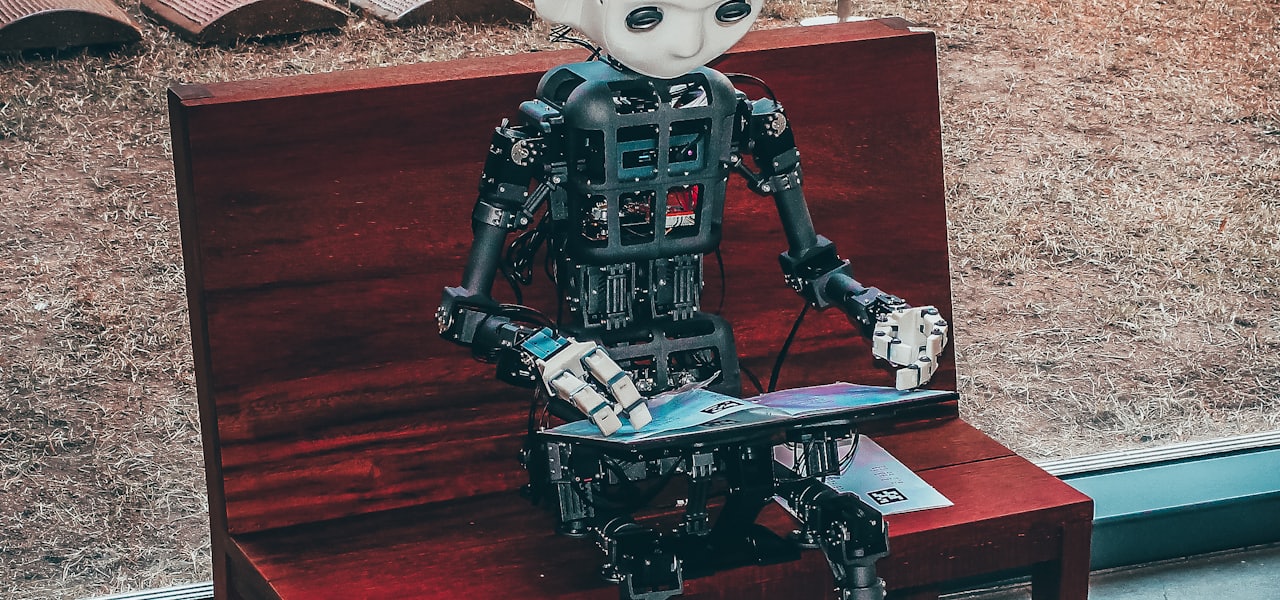
    Documentation science is the study of the recording and retrieval of information. It includes methods for storing, retrieving, and sharing of information captured on physical as well as digital documents. This field is closely linked to the fields of library science and information science but has its own theories and practices. The term documentation science was coined by Belgian lawyer and peace activist Paul Otlet. He is considered to be the forefather of information science. He along with Henri La Fontaine laid the foundations of documentation science as a field of study. Professionals in this field are called documentalists. Over the years, documentation science has grown to become a large and important field of study. Evolving from traditional practices like archiving and retrieval to modern theories about the nature of documents, novel methods for organizing digital information, and applications in libraries, research, healthcare, business, and technology and more. This field continues to evolve in the digital age. == Developments in documentation science == 1895: The International Institute of Bibliography (originally Institut International de Bibliographie, IIB) was established on 12 September 1895, in Brussels, Belgium by Paul Otlet and Henri La Fontaine. It aimed to catalog all recorded knowledge using a universal classification system now known as the Universal Decimal Classification (UDC). 1931: International Institute of Bibliography (originally Institut International de Bibliographie, IIB) was renamed The International Institute for Documentation, (Institut International de Documentation, IID). 1934: Paul Otlet envisioned a “radiated library,” a global network of interconnected documents accessible from anywhere via telecommunication. This early idea is now seen as a forerunner of the internet. 1937: American Documentation Institute was founded (1968 nameshift to American Society for Information Science). 1951: Suzanne Briet published Qu'est-ce que la documentation? where she proposed that “a document is evidence in support of a fact,” expanding the definition to include objects such as animals in zoos when they are part of a scientific study. This was a significant theoretical shift in defining documents. 1965-1990: Documentation departments were established, for example, large research libraries, online computer retrieval systems and more. The persons doing the searches were called documentalists. But with the appearance of first CD-ROM databases in the mid-1980s and later the internet in 1990s, these intermediary searches decreased and most such departments closed or merged with other departments. 1996: "Dokvit", Documentation Studies, was established in 1996 at the University of Tromsø in Norway. 2001: The Document Academy was established. It is an international network that celebrates documentation. It was conducted by The Program of Documentation Studies, University of Tromsø, Norway and The School of Information Management and Systems, UC Berkeley. 2003: The first Document Research Conference (DOCAM), a series of conferences made by the Document Academy. DOCAM '03 (2003) was held 13–15 August 2003 at The School of Information Management and Systems (SIMS) at the University of California, Berkeley. 2007: Michael Buckland, Ronald Day, and Birger Hjørland expanded the theoretical foundations of documentation science. They researched and explored documents to be social artifacts, the role of ideology in classification, and how documents influenced knowledge systems. 2010s: The concept of post-documentation or “documentality” began in the 2010s, which focused on how digital traces (e.g., tweets, logs) function as documents without traditional physical form. This led to new thinking in document theory. 2016–present: The Document Academy's DOCAM conferences have continued, offering ongoing developments in the theory and practice of documentation. Themes include affect, memory, activism, and born-digital records. 2017: The journal Information Research published special issues addressing “document theory,” including views on documentation in virtual environments and digital archives. 2020–present: The growth of research data management (RDM) and open science has made documentation practices central to data sharing, metadata standards, and reproducibility in scientific work. == Theoretical foundations == Documentation science has some deep theories that explain what a document is, how people use documents, and how they are organized. These concepts were introduced by scholars who have not only studied libraries, but also philosophy, language, and social sciences. Suzanne Briet described a document as “any material form of evidence” that is made to be used as proof or to share information. An antelope in a zoo, for example, can be a document because it is being studied, classified, and described. Documents are not just things or materials but are also shaped by society. Michael Buckland noted that documents have meaning only when people agree they are useful or valid as information. He explained a document becomes a document when someone decides to use it as evidence. Ronald Day wrote about how documentation is not neutral, it can be influenced by power, ideology, and politics. He claimed that classification systems, like how libraries organize books, are not just technical tools. They also show what kinds of knowledge are seen as more important than others. In recent years, new theories have been introduced, like “documentality” by Maurizio Ferraris. He proposed that a document does not have to be a paper or file, it can also be something digital like a tweet, a database entry, or a log file, as long as it leaves a trace that can be looked at later. This theory helps explain modern digital documents. == Methodologies and practice == Documentation science includes many methods that help people collect, organize, store, and find information. These practices are used in libraries, archives, research labs, companies, and now also in online systems. === Collecting and creating documents === In the past, documentation work included gathering books, articles, reports, and other printed materials. People created records of these materials manually, using catalog cards, indexes, or bibliographies. Paul Otlet’s work with the Universal Bibliographic Repertory is one example. He created millions of card entries to organize knowledge from around the world. Today, documents are not only created by humans. Computers and machines also generate documents, like log files, metadata, and sensor data. These need new tools and methods for collection and management. === Organizing information === Organizing documents has always been a foundational element of documentation science. Methods like classification (dividing things into groups) and indexing (making lists of topics or keywords) help individuals find what they need. A widely used system is the Universal Decimal Classification (UDC) developed by Otlet and La Fontaine. Another is the Library of Congress Classification (LCC) used in the majority of U.S. libraries. Indexing can be performed by humans or by software programs that read the text and add tags to documents. Metadata is also used to describe documents. Metadata is “data about data” like the title, author, date, and subject of a document. Standards like Dublin Core are used in digital libraries to keep metadata consistent. === Retrieval and access === One of the main objectives of documentation is helping users find the right document. This is called information retrieval. In the past, this meant using catalog drawers or printed indexes. Today, people use search engines, databases, and digital libraries. Modern retrieval tools use Boolean logic, ranking algorithms, and sometimes machine learning to show the most useful results first. This is part of what is studied in both documentation science and information retrieval. === Preservation and archiving === Documents require long-term storage. This is called preservation of documents. Printed documents can be damaged by light, pests, or even time on the other hand digital documents can be deemed worthless if formats become outdated or storage facilities fail. Archivists use methods like migration, which includes moving files to new formats, and emulation, which replicates obsolete systems, to preserve materials. These methods and tools are ever changing as new technologies develop. But the main objective of documentation has remained the same, which is to keep information safe, organized, and easy to find. == Documentation in the digital age == With the expansion of the internet, computers, and cloud storage, documents are no longer just books, papers, or reports. They can now be emails, tweets, videos, websites, databases, or even log files created by machines. === Born-digital documents === Many documents today are created directly in digital form. These are called born-digit

    Read more →
  • Splitwise

    Splitwise

    Splitwise is an online expense-splitting application software accessible via web browser and mobile app. The app facilitates repayments of shared bills by calculating what each person in a group owes. The primary competitor to the app is Venmo, which only operates in the U.S. Splitwise allows users to create groups with friends to determine what each person owes. All expenses and allocations are added to the app, and Splitwise simplifies the transaction history to determine exactly what payments need to be made to whom to settle outstanding balances. Splitwise stores user information via cloud storage. It was developed and is owned by Splitwise Inc., based in Providence, Rhode Island, United States. == History == The app was launched in February 2011 as SplitTheRent, intended to be used for rent splitting, by Ryan Laughlin, Jon Bittner and Marshall Weir. In September 2013, Splitwise was integrated with Venmo to allow users to settle payments via Venmo. In April 2024, Splitwise partnered with Tink, a Visa payment services company, to incorporate a bank transfer feature directly in the Splitwise app. === Financing === In December 2014, the company raised $1.4 million. In October 2016, the company raised $5 million. In April 2021, Splitwise raised $20 million in funding from series A round run by Insight Partners. == Reception == A 2022 opinion piece in The Guardian by London journalist Imogen West-Knights shared the negative effects of exactly splitting bills among friends and family members. West-Knights argued that Splitwise and similar apps can "turn people into those true enemies of all that is fun and joyful in the world: accountants." However, she said the app does work better when used by couples rather than friend groups. Other reviews noted that the app makes people petty. In contrast, an article published by Condé Nast Traveler describes how Splitwise eliminated stress caused by complicated offline bill splitting, saying it "fixed such a pervasive obstacle in group travel." Coverage by The Wall Street Journal lands somewhere in between the two contrasting views, saying Splitwise and similar apps are helpful, but users need to be prepared for difficult money-related conversations that may arise. An etiquette advisor at Debrett's, said, "The less talk you can have about money on any of these occasions, the better." An editor suggested conversations as simple as asking, "We’re splitting this evenly, right?" before a meal.

    Read more →
  • Sequential algorithm

    Sequential algorithm

    In computer science, a sequential algorithm or serial algorithm is an algorithm that is executed sequentially – once through, from start to finish, without other processing executing – as opposed to concurrently or in parallel. The term is primarily used to contrast with concurrent algorithm or parallel algorithm; most standard computer algorithms are sequential algorithms, and not specifically identified as such, as sequentialness is a background assumption. Concurrency and parallelism are in general distinct concepts, but they often overlap – many distributed algorithms are both concurrent and parallel – and thus "sequential" is used to contrast with both, without distinguishing which one. If these need to be distinguished, the opposing pairs sequential/concurrent and serial/parallel may be used. "Sequential algorithm" may also refer specifically to an algorithm for decoding a convolutional code.

    Read more →
  • Encyclopaedistics

    Encyclopaedistics

    Encyclopaedistics or encyclopaedics as a discipline, is the academic scholarship of encyclopedias as sources of encyclopedic knowledge and cultural objects as well; in this sense, this discipline is also known as "encyclopaedia studies" and can be termed as "theoretical encyclopaediography" by analogy with theoretical lexicography. Encyclopaedistics as a practical activity (profession or business) also called "encyclopaedic practice" or "encyclopedism" is the process of assembling encyclopaedias available to the public for sale or for free (encyclopaedia publishing or practical encyclopediography). In this sense, it is the art or craft of writing, compiling, and editing the paper or online encyclopedias. As a practical activity, encyclopaedistics originated in the Middle Ages in connection with the development of compendiums based on alphabetical structuring (e.g. first edition of Polyanthea by Dominicus Nanus Mirabellius). Encyclopaedistics is often defined as "the art and science of selecting and disseminating the information most significant to mankind". == Field of study == Encyclopaedistics is a specialized aspect of information science and communication science. At the same time, encyclopaedistics is also considered as one of scholarly disciplines which are seen as auxiliary for historical research (auxiliary sciences of history) . Third, encyclopaedics is a domain of philosophy (Romanticism). This term associated with German philosophers of the 18th century, such as Novalis, Friedrich Schlegel, who sought to create a "Scientific Bible" - both real and ideal book as the quintessence of human education (enlightenment). In any case, the most popular topics in encyclopaedia studies refferd the history of organization of encyclopaedic knowledge, encyclopaedic knowledge determination and selection, glossary composition, current state of development of encyclopaedic activity, features of making encyclopaedias and encyclopaedic articles, usage, role and significance of encyclopaedias, typology of encyclopaedic literature, encyclopaedists and encyclopaedic schools, opposition of classical encyclopaedias and Wikipedia as well as paper encyclopaedias and online encyclopaedias, case experience in building encyclopedias etc. In general, scholarly studies contribute to appearance of successful well-crafted encyclopaedias with high-quality articles. == Contemporary encyclopaedic practice == Today, academic institutions, universities, and publishing companies worldwide are engaged in encyclopaedic activity building national, multinational (universal), regional and subject-specific encyclopaedias, or doing studies related encyclopaedias. The development of national encyclopaedias is one of the prerogatives of the European Parliament in the policy of protection of accurate and verified information and in the fight against mis- and disinformation as well as in the policy of protecting, promoting and projecting Europe's values and interests in the world.

    Read more →
  • SQL/PSM

    SQL/PSM

    SQL/PSM (SQL/Persistent Stored Modules) is an ISO standard mainly defining an extension of SQL with a procedural language for use in stored procedures. Initially published in 1996 as an extension of SQL-92 (ISO/IEC 9075-4:1996, a version sometimes called PSM-96 or even SQL-92/PSM), SQL/PSM was later incorporated into the multi-part SQL:1999 standard, and has been part 4 of that standard since then, most recently in SQL:2023. The SQL:1999 part 4 covered less than the original PSM-96 because the SQL statements for defining, managing, and invoking routines were actually incorporated into part 2 SQL/Foundation, leaving only the procedural language itself as SQL/PSM. The SQL/PSM facilities are still optional as far as the SQL standard is concerned; most of them are grouped in Features P001-P008. SQL/PSM standardizes syntax and semantics for control flow, exception handling (called "condition handling" in SQL/PSM), local variables, assignment of expressions to variables and parameters, and (procedural) use of cursors. It also defines an information schema (metadata) for stored procedures. SQL/PSM is one language in which methods for the SQL:1999 structured types can be defined. The other is Java, via SQL/JRT. SQL/PSM is derived, seemingly directly, from Oracle's PL/SQL. Oracle developed PL/SQL and released it in 1991, basing the language on the US Department of Defense's Ada programming language. However, Oracle has maintained a distance from the standard in its documentation. IBM's SQL PL (used in DB2) and Mimer SQL's PSM were the first two products officially implementing SQL/PSM. It is commonly thought that these two languages, and perhaps also MySQL/MariaDB's procedural language, are closest to the SQL/PSM standard. However, a PostgreSQL addon implements SQL/PSM (alongside its other procedural languages like the PL/SQL-derived plpgsql), although it is not part of the core product. RDF functionality in OpenLink Virtuoso was developed entirely through SQL/PSM, combined with custom datatypes (e.g., ANY for handling URI and Literal relation objects), sophisticated indexing, and flexible physical storage choices (column-wise or row-wise).

    Read more →
  • Enterprise mobile application

    Enterprise mobile application

    The term enterprise mobile application is used in the context of mobile apps created/brought by individual organizations for their workers to carry out the functions required to run the organization. It is the process of building a mobile application for the requirements of an enterprise. An enterprise mobile application belonging to an organization is expected to be used by only the workers of that organization. The definition of enterprise mobile application does not include the mobile apps that an organization create for its customers or consumers of the products or services generated by the organization. == Example == An organization, whether for-profit or non-profit, may create a mobile app for its members to track inventory levels of supplies they distribute to their target communities or materials used in product manufacturing. Such a mobile app comes under the definition of enterprise mobile application. However, the same organization may also create another mobile app to sell their products to end users or spread awareness of their services to various communities, and that mobile app would not come under definition of enterprise mobile application. == Enterprise mobile solution providers == Enterprise Mobile solution providers create and develop apps for individual organizations that can buy instead of creating the apps themselves. Reasons for Organizations buying the apps include time and cost savings, technical expertise. Today Enterprise Mobility is playing track role for enterprise transformation. Today, enterprises needs productivity is a fast way. Enterprise mobility helps business owners to build their work in a progressive way by assisting enterprise mobility solutions.

    Read more →
  • Information literacy

    Information literacy

    The Association of College and Research Libraries defines information literacy as a "set of integrated abilities encompassing the reflective discovery of information, the understanding of how information is produced and valued and the use of information in creating new knowledge and participating ethically in communities of learning". In the United Kingdom, the Chartered Institute of Library and Information Professionals' definition also makes reference to knowing both "when" and "why" information is needed. The 1989 American Library Association (ALA) Presidential Committee on Information Literacy formally defined information literacy (IL) as attributes of an individual, stating that "to be information literate, a person must be able to recognize when information is needed and have the ability to locate, evaluate and use effectively the needed information". In 1990, academic Lori Arp published a paper asking, "Are information literacy instruction and bibliographic instruction the same?" Arp argued that neither term was particularly well defined by theoreticians or practitioners in the field. Further studies were needed to lessen the confusion and continue to articulate the parameters of the question. The Alexandria Proclamation of 2005 defined the term as a human rights issue: "Information literacy empowers people in all walks of life to seek, evaluate, use and create information effectively to achieve their personal, social, occupational and educational goals. It is a basic human right in a digital world and promotes social inclusion in all nations." The United States National Forum on Information Literacy defined information literacy as "the ability to know when there is a need for information, to be able to identify, locate, evaluate, and effectively use that information for the issue or problem at hand." Meanwhile, in the UK, the library professional body CILIP, define information literacy as "the ability to think critically and make balanced judgements about any information we find and use. It empowers us as citizens to develop informed views and to engage fully with society." A number of other efforts have been made to better define the concept and its relationship to other skills and forms of literacy. Other pedagogical outcomes related to information literacy include traditional literacy, computer literacy, research skills and critical thinking skills. Information literacy as a sub-discipline is an emerging topic of interest and counter measure among educators and librarians with the prevalence of misinformation, fake news, and disinformation. Scholars have argued that in order to maximize people's contributions to a democratic and pluralistic society, educators should be challenging governments and the business sector to support and fund educational initiatives in information literacy. == History == The phrase "information literacy" first appeared in print in a 1974 report written on behalf of the National Commission on Libraries and Information Science by Paul G. Zurkowski, who was at the time president of the Information Industry Association (now the Software and Information Industry Association). Zurkowski used the phrase to describe the "techniques and skills" learned by the information literate "for utilizing the wide range of information tools as well as primary sources in molding information solutions to their problems" and drew a relatively firm line between the "literates" and "information illiterates." The concept of information literacy appeared again in a 1976 paper by Lee Burchina presented at the Texas A&M University library's symposium. Burchina identified a set of skills needed to locate and use information for problem solving and decision making. In another 1976 article in Library Journal, M.R. Owens applied the concept to political information literacy and civic responsibility, stating, "All [people] are created equal but voters with information resources are in a position to make more intelligent decisions than citizens who are information illiterates. The application of information resources to the process of decision-making to fulfill civic responsibilities is a vital necessity." In a literature review published in an academic journal in 2020, Oral Roberts University professor Angela Sample cites several conceptual waves of information literacy definitions as defining information as a way of thinking, a set of skills, and a social practice. The introduction of these concepts led to the adoption of a mechanism called metaliteracy and the creation of threshold concepts and knowledge dispositions, which led to the creation of the ALA's Information Literacy Framework. The American Library Association's Presidential Committee on Information Literacy released a report on January 10, 1989. Titled as the Presidential Committee on Information Literacy: Final Report, the article outlines the importance of information literacy, opportunities to develop it, and the idea of an Information Age School. The recommendations of the Committee led to establishment of the National Forum on Information Literacy, a coalition of more than 90 national and international organizations. In 1998, the American Association of School Librarians and the Association for Educational Communications and Technology published Information Power: Building Partnerships for Learning, which further established specific goals for information literacy education, defining some nine standards in the categories of "information literacy," "independent learning," and "social responsibility." Also in 1998, the Presidential Committee on Information Literacy updated its final report. The report outlined six recommendations from the original report, and examined areas of challenge and progress. In 1999, the Society of College, National and University Libraries (SCONUL) in the UK published The Seven Pillars of Information Literacy to model the relationship between information skills and IT skills, and the idea of the progression of information literacy into the curriculum of higher education. In 2003, the National Forum on Information Literacy, along with UNESCO and the National Commission on Libraries and Information Science, sponsored an international conference in Prague. Representatives from twenty-three countries gathered to discuss the importance of information literacy in a global context. The resulting Prague Declaration described information literacy as a "key to social, cultural, and economic development of nations and communities, institutions and individuals in the 21st century" and declared its acquisition as "part of the basic human right of lifelong learning". In the United States specifically, information literacy was prioritized in 2009 during President Barack Obama's first term. In effort to stress the value information literacy has on everyday communication, he designated October as National Information Literacy Awareness Month in his released proclamation. In 2015, the Association of College and Research Libraries (ACRL) adopted the Framework for Information Literacy for Higher Education, which defines information literacy as "the set of integrated abilities encompassing the reflective discovery of information, the understanding of how information is produced and valued, and the use of information in creating new knowledge and participating ethically in communities of learning".Association of College and Research Libraries (2015-02-09). "Framework for Information Literacy for Higher Education". Association of College and Research Libraries. American Library Association. Retrieved 2026-02-17. == Presidential Committee on Information Literacy == The American Library Association's Presidential Committee on Information Literacy defined information literacy as the ability "to recognize when information is needed and have the ability to locate, evaluate, and use effectively the needed information" and highlighted information literacy as a skill essential for lifelong learning and the production of an informed and prosperous citizenry. The committee outlined six principal recommendations. Included were recommendations like "Reconsider the ways we have organized information institutionally, structured information access, and defined information's role in our lives at home in the community, and in the work place"; to promote "public awareness of the problems created by information illiteracy"; to develop a national research agenda related to information and its use; to ensure the existence of "a climate conducive to students' becoming information literate"; to include information literacy concerns in teacher education democracy. In the updated report, the committee ended with an invitation, asking the National Forum and regular citizens to recognize that "the result of these combined efforts will be a citizenry which is made up of effective lifelong learners who can always find the information needed for the issue or decision at hand. This new

    Read more →
  • Metadirectory

    Metadirectory

    A metadirectory system provides for the flow of data between one or more directory services and databases in order to maintain synchronization of that data. It is an important part of identity management systems. The data being synchronized typically are collections of entries that contain user profiles and possibly authentication or policy information. Most metadirectory deployments synchronize data into at least one LDAP-based directory server, to ensure that LDAP-based applications such as single sign-on and portal servers have access to recent data, even if the data is mastered in a non-LDAP data source. Metadirectory products support filtering and transformation of data in transit. Most identity management suites from commercial vendors include a metadirectory product, or a user provisioning product.

    Read more →